
For over 30 years we have been building projects our clients are proud of
Rating projects involve implementing end-to-end technology solutions at organizations and plants across Kazakhstan. We offer the full cycle of work: from analysing the situation and designing a solution around the client's needs through to launch, technical support and further development of the project.
 Company video
- 30+ years on the market
We have been developing IT solutions and building industry expertise since 1994.
- 500+ delivered projects
We build and implement solutions for government and commercial organizations.
- 150+ specialists
We bring together developers, engineers and experts from different fields.
- 12+ years average experience
The team's experience helps to solve complex technology tasks with confidence.
- 95% hold a university degree
Professional knowledge is the foundation of the quality of our projects.
- 40+ hours of training a year
We keep building our skills and mastering modern technology.

From government systems to solutions for leading companies in Kazakhstan
Every project starts with the client's task and ends with a measurable result. Below are delivered cases: what had to be solved, what we did and what it gave the client.
-
01.
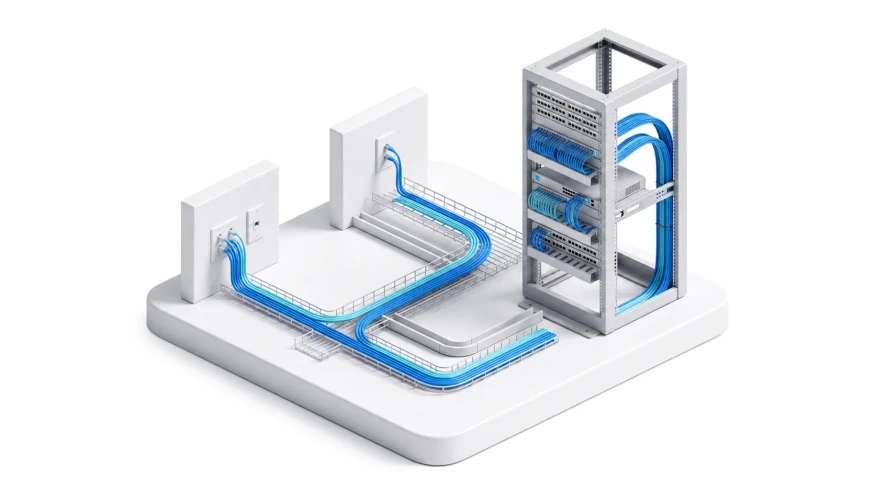
Supply of TV sets and installation of a TV information display system at the Kazzinc LLP administrative office, 33 Voroshilov St., Building 1.
What we did
We supplied, installed and commissioned a TV information display system for an administrative office. The project included installing TV panels, switching equipment and communication lines and setting up a centralized system for managing and broadcasting information content to screens throughout the building. After installation, the system was commissioned, tested and put into operation.
-
02.
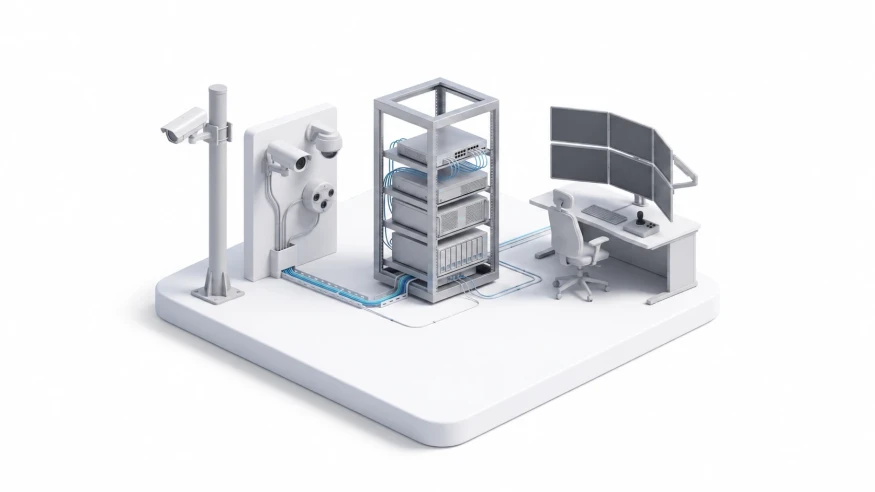
Installation of a video surveillance system at the railway crossings of Kazzinc's Ridder Metallurgical Complex.
What we did
A 24/7 video monitoring system was set up at the railway crossings, sending video to the company's monitoring post. The project included installing cameras, data transmission equipment and switching nodes and integrating the system into the site's existing communication infrastructure. Video archiving and remote monitoring of the crossings were implemented to improve transport safety and allow a prompt response to any situation.
-
03.
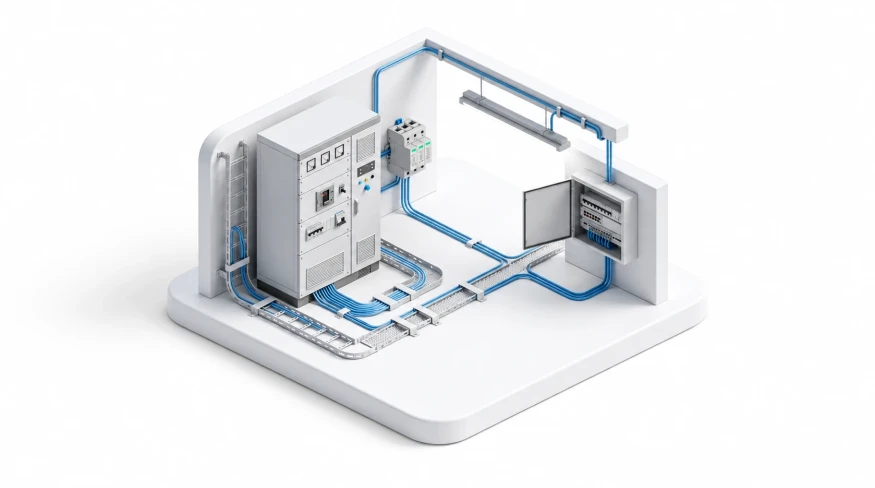
Installation of a lighting system at the railway crossings of Kazzinc's Ridder Metallurgical Complex
What we did
The lighting system at the railway crossings was upgraded with new, modern lighting equipment. We organized the power supply and lighting control and ensured that illumination meets regulatory standards. This made the crossings safer and more reliable to operate.
-
04.
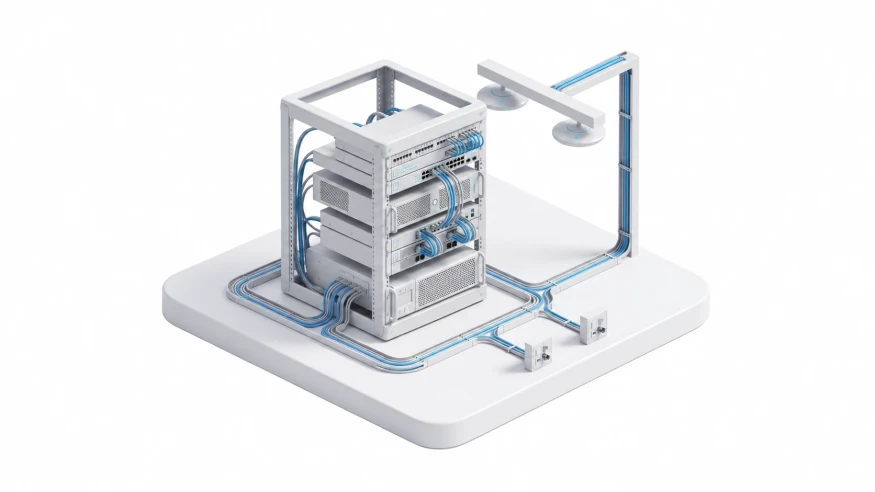
Installation of a local area network in the Outpatient Centre building in Ridder.
What we did
A local area network was built in the Outpatient Centre building, connecting staff workstations, medical equipment and the centre's information systems to a single network infrastructure. The project included deploying the cabling system, setting up switching nodes and connecting network equipment. The solution provides reliable data exchange between the centre's departments and room to expand its IT infrastructure.
-
05.
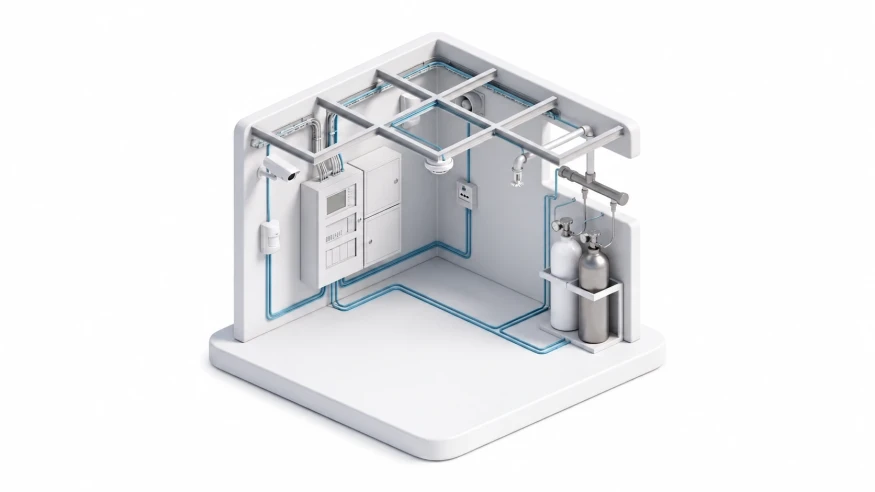
Construction and installation work at the Kazzinc LLP administrative building, 33a Shakarim Ave.
What we did
We fitted out the Kazzinc LLP administrative building with building and low-voltage systems that provide security, comfortable working conditions for staff and a reliable IT infrastructure. The project covered the supply, installation and commissioning of air conditioning, intruder alarm, video surveillance, access control, structured cabling and TV distribution systems. The work included building the cabling infrastructure, installing and connecting security equipment, setting up video monitoring of the interior and surrounding grounds, introducing access control for staff and visitors and deploying a TV network to receive and distribute the TV signal. We also installed climate control equipment to maintain the required indoor conditions throughout the administrative complex. All subsystems were integrated into a single building infrastructure, configured, tested and commissioned. The solutions improved security, made the building systems reliable and created a modern technical environment for running the building efficiently.
-
06.
Design, construction and installation work at the clinic building of Kazzinc's Ust-Kamenogorsk Metallurgical Complex
What we did
We designed and carried out construction and installation work to fit out the clinic building of Kazzinc's Ust-Kamenogorsk Metallurgical Complex with building and low-voltage systems. The project included preparing design documentation and implementing power supply and lighting, fire and intruder alarm, video surveillance and structured cabling systems. The aim was to provide reliable power to the clinic, create a safe and comfortable environment for patients and medical staff and introduce modern monitoring and security tools. We installed cable routes, switchgear, fire and intruder alarm equipment, cameras and the switching infrastructure. Particular attention was paid to the reliability of the building systems, compliance with regulations and integrating all subsystems into a single building infrastructure. After construction and installation, the equipment was tested and commissioned and the facility was prepared for operation.
-
07.
Installation of fire and intruder alarms and automatic fire suppression systems at Kazzinc's Ridder Metallurgical Complex.
What we did
At Kazzinc's Ridder Metallurgical Complex, we equipped production and auxiliary buildings with fire and intruder alarms and automatic fire suppression. The project aimed to raise industrial and fire safety, detect emergencies in time and respond to fires automatically. The solution is built on the Orion hardware and software suite by Bolid, which provides centralized monitoring, management and status control for all of the site's security subsystems. The work was carried out at an operating metallurgical plant without stopping its main production processes. This required phased installation, coordination with production services and compliance with strict industrial safety requirements. We installed and connected alarm control panels, fire and intrusion detectors, sounders, actuators and automatic fire suppression equipment. We laid cable lines, configured how the equipment interacts, set up dispatch monitoring and integrated the security systems with the company's existing infrastructure. After installation, comprehensive tests were carried out, equipment performance was verified and alarm response scenarios were rehearsed. The system provides centralized control of fire and security equipment, real-time status monitoring and reliable protection for the plant's production premises, process areas and building infrastructure.
-
08.
A range of work at the Kazzinc LLP Training Centre, 8 Promyshlennaya St.
What we did
At the Kazzinc LLP Training Centre, we built modern building and low-voltage infrastructure to keep the learning process safe and efficient. The project delivered fire and intruder alarm, power supply and lighting, video surveillance and structured cabling systems. Classrooms, administrative and technical rooms were equipped with security, data and power systems. We installed distribution and switching nodes, built the cabling infrastructure and installed video monitoring equipment and emergency detection devices. Particular attention was paid to the reliability of the building systems and to leaving room for the centre's IT infrastructure to grow. The result is a single technical environment that keeps the building safe and the equipment running smoothly and provides comfortable conditions for training and events.
-
09.
Installation of a video surveillance system at the substations of Combined Shop No. 2, Kazzinc's Ridder Metallurgical Complex.
What we did
A video surveillance system was introduced at the substations of Combined Shop No. 2 at Kazzinc's Ridder Metallurgical Complex to remotely monitor electrical equipment and process rooms and raise industrial safety. The system provides 24/7 surveillance of energy infrastructure and gives operating staff immediate access to video. We placed cameras inside the substations and on the surrounding grounds, set up data links and connected the equipment to the company's existing communication network. Centralized video monitoring, video archiving and remote access were implemented. The work was carried out at an operating industrial plant in compliance with occupational health, electrical safety and industrial safety requirements. As a result, the power supply facilities are under continuous visual monitoring, which has made emergency response faster and the operation of power equipment more efficient.
-
10.
Design and estimate documentation and video surveillance installation at Kazzinc's Kazzincmash industrial complex in Ridder and Ust-Kamenogorsk.
What we did
For the production sites of Kazzinc's Kazzincmash industrial complex in Ridder and Ust-Kamenogorsk, we prepared design and estimate documentation and built a video surveillance system. The project aimed to make the production facilities safer and to monitor process areas, storage yards, transport routes and the site perimeter. We surveyed the sites and developed technical solutions and design documentation that took into account the operating plant and the geographically dispersed sites. We installed cameras, switching nodes, data transmission equipment and video archive storage and set up communication links between the sites and monitoring points. The system provides 24/7 visual monitoring of production processes and the plant grounds, centralized access to video and the ability to respond quickly to emergencies. The work was carried out at an operating industrial plant in compliance with industrial safety requirements and without disrupting the production cycle.
-
11.
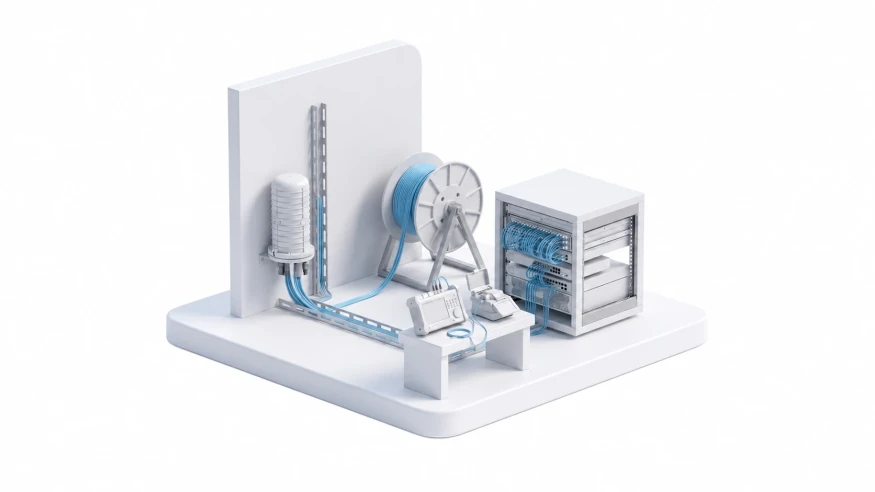
Design, construction and installation under the working project “New Optical Backbone Lines and Interconnects for Kazzinc LLP”
What we did
We carried out design, construction and installation work under the working project “New Optical Backbone Lines and Interconnects for Kazzinc LLP”. The project aimed to modernize the corporate data network, make communication links more reliable and build in capacity for the further growth of the company's digital infrastructure. We surveyed the existing telecom infrastructure, prepared design and estimate documentation and built new fibre-optic backbones between the company's production, administrative and process facilities. Several hundred kilometres of optical cable with up to 288 fibres were laid, significantly increasing network capacity, providing redundant links and leaving headroom for future telecom growth. We laid cable routes, installed splice closures, cross-connect equipment and communication nodes, set up interconnects between network segments and created backup data routes. The work was carried out at an operating plant without disrupting existing communication systems or production processes. After construction, the fibres were spliced and measured, the lines were checked with OTDR, data channels were tested and the facilities were commissioned. The project has significantly improved the fault tolerance, scalability and performance of the Kazzinc corporate network.
-
12.
Upgrade of the process network at Kazzinc's RMP MC

What we did
We upgraded the process communication network at Kazzinc's RMP MC, which carries data between production facilities and automation and dispatch control systems. The project ran in parallel with the modernization of the company's fibre-optic infrastructure. The work included upgrading communication nodes, expanding the process data network and fully equipping the DCS nodes. We set up guaranteed power with UPS units and service bypasses and installed fire and intruder alarms, access control, air conditioning and auxiliary building infrastructure to keep the automation equipment running reliably. The new fibre-optic backbones increased link capacity and provided redundancy for critical network segments. The work was carried out at an operating plant without stopping production processes. The solutions made process data transfer more reliable, ensured stable operation of the automation nodes and laid the foundation for the further growth of the company's digital infrastructure.
-
13.
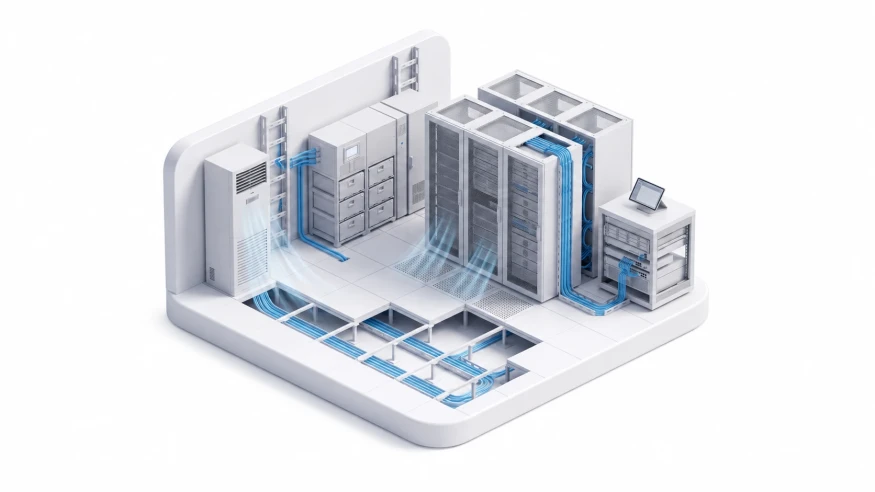
Construction and installation work to equip Kazzinc LLP server rooms
What we did
We carried out construction and installation work to equip the Kazzinc LLP server rooms that house the company's server, network and telecom equipment and keep it running without interruption. The project created a complete building infrastructure for the server rooms, including guaranteed power supply, diesel generator sets, uninterruptible power supplies, service bypasses, power distribution and monitoring systems. A multi-level power redundancy scheme keeps the equipment running if external power fails. Precision air conditioning with redundant units maintains temperature and humidity within set ranges around the clock. To protect the equipment, we installed automatic gas fire suppression with automatic smoke extraction, as well as fire and intruder alarms, access control and video surveillance. We built a structured cabling system, installed server and network racks and set up telecom nodes and cabling infrastructure. The rooms were fitted with a dielectric raised floor to house building services and equipment. The solutions provide high fault tolerance, security and continuity for the company's information systems, creating a modern infrastructure for critical services, automation systems and process networks.
-
14.
Digitizing data registries for government agencies in East Kazakhstan Region
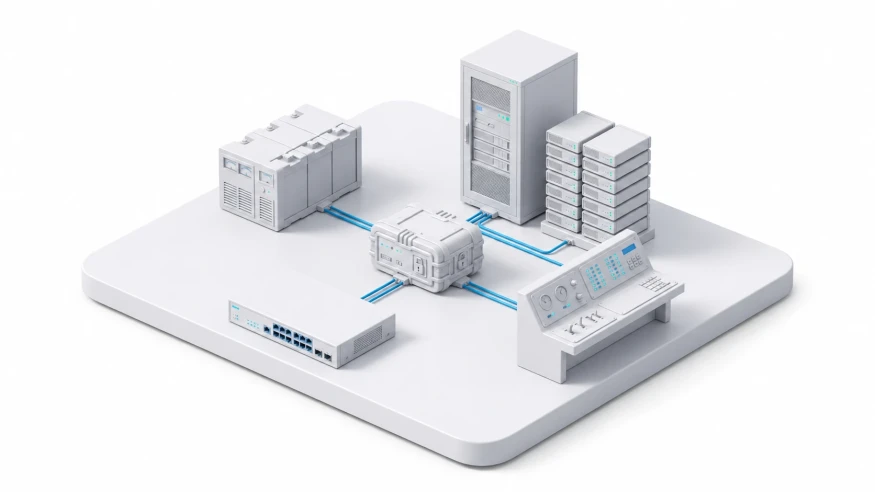
What we did
The project grew out of a problem that almost every government agency faces: the data exists, but it is scattered. Some of it sits in paper logbooks, some in Excel spreadsheets on local computers, some in email and messenger threads. Whenever a report or an interagency request is needed, staff gather information by hand, spending days on what should take minutes. The client wanted to break out of this cycle and build a single digital environment for working with data — with no losses, no duplication and no human error in reporting. We began by studying the agency's real processes: what data is kept and in what form, who requests it and how, and what reports are produced and how often. This let us do more than move existing spreadsheets into digital form: we rethought how the data is stored so that the system itself can answer most routine requests. Based on this analysis, we designed the registries — structured, with a clear data model and update rules. Development followed a modular approach. First came the core: a data collection module and registries that replaced paper records and unstructured documents. Next came an integration layer that connects to external government information systems and enables interagency exchange without manual copying. In parallel, we built analytics services and a visualization module so that management sees the current picture in a convenient view rather than as raw tables. A separate outcome was the automated reporting module: the system produces reports in fixed formats on schedule, eliminating manual data gathering before every submission. The final layer is an LLM-based AI assistant that lets staff ask questions about the data in plain language and get answers without having to understand the registry structure or build queries by hand. As a result, the agency now has a living platform that does more than store data: it actively works with it, from data entry to analytics and interagency cooperation.
-
15.
Implementation and support of the Situation Centre information system for the Akim of East Kazakhstan Region
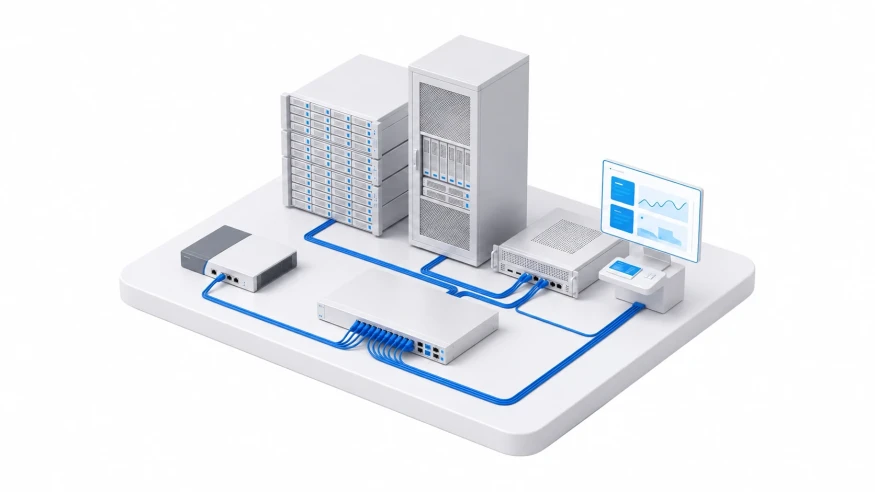
What we did
The project began with a request from the regional leader: to see what is really happening in the city or region here and now, not through weekly reports from subordinate bodies. The problem was not a lack of data but its fragmentation: energy companies reported in one format, healthcare in another, employment and social protection in yet another. The akim received scattered snapshots instead of a single picture. The goal was ambitious: bring everything together in one system that processes the data, spots problem areas on its own and is ready to answer a question at any moment. We started by inventorying data sources in each area: security, housing and utilities and energy, education, healthcare, employment, social protection, tourism, business, industry, the economy and public procurement. For each area, we analysed the available data, how it is stored and how often it is updated. This was painstaking work, but the integration layer could not have been built without it. The result was the architecture of a single database that pulls in data streams from all departmental systems. Development moved from the core to the interface. First came integration services and a data collection module that ensure a steady flow of up-to-date information from external systems. Then came analytics services that process raw data and detect deviations, trends and anomalies in each area. On this foundation we built a portal with dashboards: each area is a separate case with charts, histograms, graphs and interactive maps where problem areas are visible without further interpretation. Special attention was paid to how management would consume the information. The system supports different formats: structured reports for formal meetings, a graphical interface on a personal tablet for day-to-day work and TV displays for the situation room. As a result, the akim and the leadership team have a tool that is always ready: the data is current, problems are visible and answers are at hand.
-
16.
Implementing an incident management platform at the East Kazakhstan Regional Analytical Centre
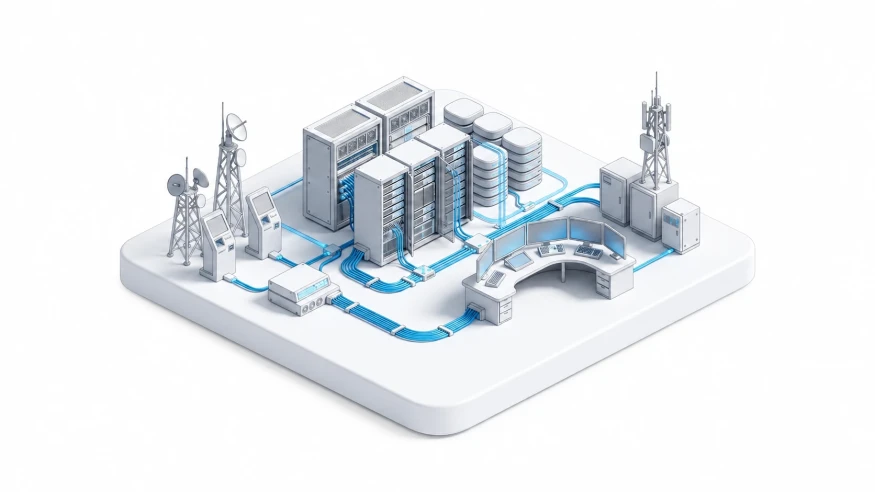
What we did
The project grew out of a challenge faced by every body responsible for city and regional infrastructure: incidents happen all the time — accidents, violations, failures, problems at facilities — yet the path from recording a problem to fixing it is often opaque and unmanaged. An incident is logged in one place, the task goes out by email or phone, the contractor reports back verbally, and there is no way to confirm the fix without a site visit. The client wanted a system in which every incident follows a managed path from first report to confirmed closure, with owners, deadlines and evidence at every stage. We began by studying how incidents actually arise and are handled: who records them, how responsibility is shared between government bodies, what resolution deadlines the regulations set for each category and where control is most often lost. It turned out that the main problem was not a lack of response but the lack of a single environment where the whole process is visible. Each body worked in its own loop, and the hand-offs between them were bottlenecks. The system architecture was built around exactly those hand-offs. Development followed the incident lifecycle. The registration and classification module provides a single point of entry: an incident is recorded with a category, description, geolocation and priority, and from that moment it lives in the system rather than in someone's inbox. The task module lets users assign work directly to the responsible government bodies, naming specific assignees and setting resolution deadlines. The system tracks deadlines automatically and flags overdue incidents without waiting for a manual check. Recording progress with photos and comments is built into the workflow: assignees document their progress directly in the system, and this becomes the evidence that the issue has been fixed. The notification service keeps everyone informed — task assignment, status changes, approaching deadlines, closure — without anyone having to log in to check for updates. The reporting module collects incident analytics: volumes, categories, resolution times and trends by responsible body. As a result, the client has an environment where an incident cannot get lost: it is either closed with confirmation or stays under control with the party missing the deadline in plain view.
-
17.
Implementing a UAV mission management platform at the East Kazakhstan Regional Analytical Centre
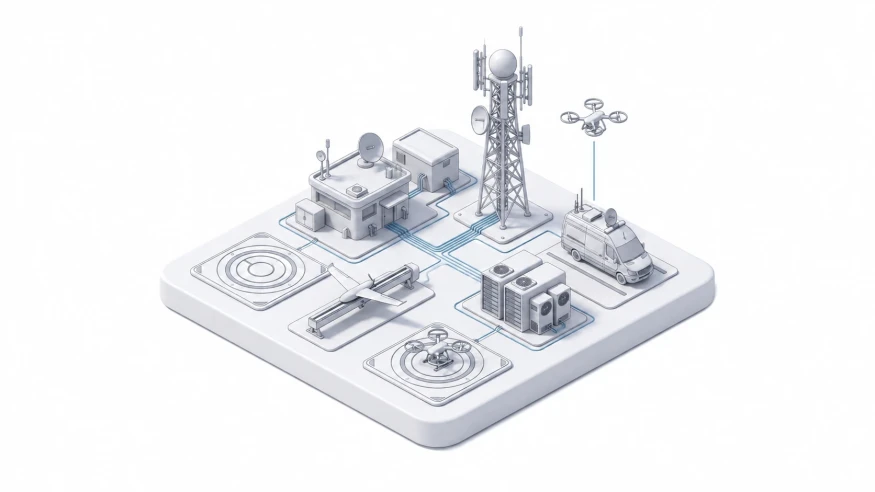
What we did
The project was launched at the request of the regional leadership of government bodies to create a single environment for operating a drone fleet. Before that, every visual monitoring mission was handled manually: tasks were set piecemeal, data came from different sources and the time from setting a task to getting results was too long for operational work. The client needed a system that would cover the entire cycle, from request to processed material. We began by selecting and supplying equipment suited to the operating environment: aircraft, ground control stations and supporting infrastructure. In parallel, we designed the software, building the architecture around the operators' real workflow rather than an abstract specification. The team studied shift patterns, tasking scenarios and how dispatchers make decisions in the moment. Development was iterative. The flight request module created tasks for crews, tracked their status and passed data along the chain. The mission management system showed aircraft positions, telemetry and task progress in real time. Aerial survey materials and remote sensing data received additional processing. Fleet maintenance became a separate workstream: the software tracks the technical condition of equipment, flight history and scheduled maintenance. This lets operators see not only current tasks but also whether each aircraft is ready for its next mission. As a result, the client has a closed loop — from an incoming request through planning, flight and data collection to maintenance and preparation for the next task — all within one system. The software manages, maintains and monitors the UAV fleet on missions that deliver up-to-date remote sensing data and aerial survey materials, improving the quality and speed with which the responsible government bodies carry out their tasks based on a single operational picture.
-
18.
Implementing a flood monitoring platform for East Kazakhstan Region based on a network of automated hydrological stations
What we did
The project was launched at the request of regional authorities to replace manual flood monitoring — site visits for measurements, phone reports and scattered spreadsheets that left the data permanently out of date — with an automated system. We began by surveying the area: identifying key points on rivers and hydraulic structures and assessing communication and off-grid power conditions. Some locations turned out to be hard to reach and without mobile coverage, which called for dedicated communication solutions. Equipment was selected and supplied to suit these conditions, and each station was installed and calibrated on site, often in flood-prone areas with limited access. Software development ran in parallel. The key challenges were processing a continuous stream of data from dozens of stations without loss or delay, normalizing telemetry from diverse equipment by different manufacturers and integrating with the client's external systems. The forecasting module took the most effort: an accurate model of how the region's water bodies behave could only be built by iteratively tuning it on real historical data. As a result, the client has a closed loop — from physically measuring the water level to issuing alerts and forecasting how events will unfold — all within one system. This hardware and software suite provides continuous automated flood monitoring, early warning of threats and support for operational decisions based on a single, up-to-date picture of the region's water bodies.
-
19.
Implementing a waste collection monitoring system in Ust-Kamenogorsk
What we did
The project started with a simple but painful problem: city and district akimats had no real visibility into how waste collection companies were doing their job. On paper, routes were agreed and schedules approved, but the only way to check whether a truck had visited every point, cut its route short or set out on time was the contractors' own paper reports. Residents' complaints piled up, but it was almost impossible to link them to a specific violation and a specific contractor. The client wanted to move control from trust to transparency. We began by studying the operating model: how routes are planned, how many companies are involved, what the vehicle fleet looks like and how trips are currently recorded. It became clear that the system had to cover three levels at once: the dispatcher at the akimat, the driver on the route and the resident at the collection point. The architecture was built around these three points of interaction. Development ran on several fronts in parallel. The work planning module digitized routes and schedules, setting a benchmark against which the system tracks deviations. Integration with the trucks' GPS tracking gave the real-time location of every vehicle: the system automatically compares the actual route with the planned one and records deviations. For drivers and crews, we built a mobile app that accompanies every trip and requires photos before and after servicing each collection point. This settled the question of evidence: cleaning is now recorded visually, not just reported. A separate component is the complaints service for residents. It was deliberately made as simple as possible: a QR code at the collection point, one scan, and the complaint goes straight to the contractor, without calls to the akimat or waiting for an answer. The problem is linked to a specific point on the map and queued for the next run. As a result, the akimat has a working control tool with a verifiable history for every route, contractors have clear performance requirements and residents have a direct way to influence the quality of the service.
-
20.
Implementing a heat source monitoring system at facilities in East Kazakhstan Region
What we did
The project grew out of a challenge that is especially acute in regions with a harsh climate: heating is infrastructure where a failure is measured not in inconvenience but in real consequences for residents. Boiler houses, CHP plants, pumping stations and central heating substations run around the clock, yet their condition has traditionally been checked through periodic rounds and manual readings. A deviation could go unnoticed for hours, until someone on site spotted it or consumers began to complain. The client wanted to move from reactive response to proactive control: to see the status of every facility in real time and get an alert before a problem turns into a breakdown. We began by surveying the heat sources: which parameters are critical for each type of facility, what equipment is already installed, where existing sensors can be connected and where a new measurement kit is needed. Based on the survey, we drew up an integration plan: at some facilities, the system was connected to the existing IoT environment; at others, we supplied and installed a local equipment kit that continuously records pressure, temperature, heat-carrier flow and related parameters. Development worked upwards from the data collection layer. The IoT integration module ensures a steady flow of telemetry from every connected facility. The data collection and processing module normalizes the incoming stream, compares current readings with the norms and records deviations. The system does not wait for the dispatcher to look at the right screen: it raises an alert the moment an anomaly appears. The final layer is a visualization module with an interactive map: every heat source is shown on a map of the city or district, and its current status can be read at a glance. Instead of a table of numbers, the dispatcher sees a live map that shows normal readings and deviations for each facility. As a result, the client has a single monitoring centre for the entire heating infrastructure, with a history of readings, real-time alerts and the geographic context needed to quickly assess the scale and location of a problem.
-
21.
Implementing a contractor works monitoring system for the Housing and Utilities Department of the Ust-Kamenogorsk City Akimat
What we did
The project grew out of a chronic problem in city management: akimats sign contracts for road repairs, snow removal, landscaping and dozens of other kinds of work, yet actual oversight of performance remains a weak spot. Contractors submit completion certificates, attach photos and report volumes, but the only way to check whether this matches reality is to go and see. There are not enough resources to inspect everything, so violations come to light either by chance or through residents' complaints after the work has already been accepted and paid for. The client wanted a system where control is built into the work itself rather than following it after the fact. We began by inventorying the types of contract work and how they are currently planned and accepted. Road repairs, snow removal, landscaping and street cleaning each have their own specifics: different units of measurement, different vehicles and different acceptance criteria. The system architecture was designed to cover this diversity with a single control logic, without needing a separate tool for each type of work. Development ran on several fronts at once. The work planning module digitized contractor assignments: sites, deadlines, responsible persons and planned volumes are all recorded in the system before work starts and become the benchmark for later checks. Integration with vehicle GPS tracking makes it possible to see whether vehicles are actually on site and compare this with the planned schedule; the system automatically records deviations in timing and route. A mobile app for contractor staff accompanies every job: the assignee records the start and end of work on site with photos that are tied to location and time and cannot be faked after the fact. The monitoring module brings all this information together into a single picture for akimat staff: which work is on track, where there are delays and where deviations have been recorded. The complaints service closes the feedback loop with residents: a report about a problem at a specific site reaches the contractor instantly and is recorded in the system instead of getting lost in calls and emails. As a result, the akimat has a tool in which every contract exists not only on paper but in real data, from the planned assignment to photo confirmation of the completed work.
-
22.
Unified open data management system for government agencies of East Kazakhstan Region
What we did
The project was carried out at the request of the regional leadership as part of government agencies' obligations to publish data under the Unified List of Open Data. Before the work began, information in dozens of areas — healthcare, construction, employment, land resources, housing and utilities, agriculture and others — was either not published at all or submitted manually, piecemeal and without a common standard. Government agencies had no tool for collecting and approving data in a structured way, and sending it to external government registries was not automated. We began by studying the requirements: we held a series of meetings with the relevant regional department, studied the technical regulations of the Open Data portal and defined the list of data collection forms to be developed. One of the first challenges was agreeing on system-to-system integration with the national operator, which required official requests, negotiations and technical agreement on the exchange protocol. Based on the requirements gathered, we developed and commissioned a subsystem made up of three interconnected components. The first is data collection forms: more than 50 structured forms covering every area of the Unified List, with functions to add, edit, filter and export data using templates. The second is an approval dashboard that gives authorized staff a tool to review, approve or reject entries before publication. The third is an integration service that automatically sends data from the Situation Centre information system to the Open Data portal on a set schedule — monthly, quarterly, every six months or annually — depending on the type of dataset. The organizational side was a separate task: at the instruction of the regional akim, a system of persons responsible for filling in each form was set up and agreed across all government agencies, and users were trained. As a result, the region's government agencies now have a single environment for working with open data, from entering and approving information to publishing it automatically in government registries. The software provides structured collection, approval and automatic transfer of government open data in line with legal requirements, creating a transparent and up-to-date information environment for the region.
-
23.
Information system for tracking instructions from regional leadership
What we did
The project began with a challenge familiar to any large government body: the head issues instructions — at meetings, after site visits, in the course of daily work — and they then spread out among assignees and get lost in email, messengers and verbal agreements. Formally, the instruction exists, the deadline is set and the assignee is named, but it is practically impossible to find out where it stands right now without phone calls and requests. Overdue instructions surfaced at the next meeting rather than when there was still time to step in. The client wanted a transparent control system in which no instruction gets lost and the status of each one is visible without extra effort. We began by studying the actual document flow: how instructions are worded and passed on, who assigns them, how deadlines and results are currently recorded and which categories of instructions require special control. It became clear that the system had to work on several levels at once: the head, the oversight office, the lead assignee and supporting assignees all have different roles and need different access to information. The architecture and role model were built around this hierarchy. Development moved from basic functions to analytics. First came the registration core: an instruction is entered with a full set of attributes, the lead and supporting assignees are named and a deadline is set. From that point on, the instruction lives in the system and moves through statuses — in progress, under review, completed — which assignees update as they go. In parallel, we built the deadline control mechanism: the system tracks deadlines automatically and flags overdue instructions and those under special control without waiting for someone to notice them. Search and filtering tools make it easy to work with a large volume of instructions: finding all tasks for a specific assignee, selecting instructions that are about to expire or viewing the history of a particular area takes just a few clicks. Access control gives each user exactly the visibility their role requires: the head sees the full picture, assignees work on their own area and the oversight office monitors overall discipline. As a result, the client has an environment in which every instruction follows a managed, transparent path from issue to completion — with no losses, no verbal agreements and no surprises at review meetings.
-
24.
Automated system for tracking therapeutic and preventive meals
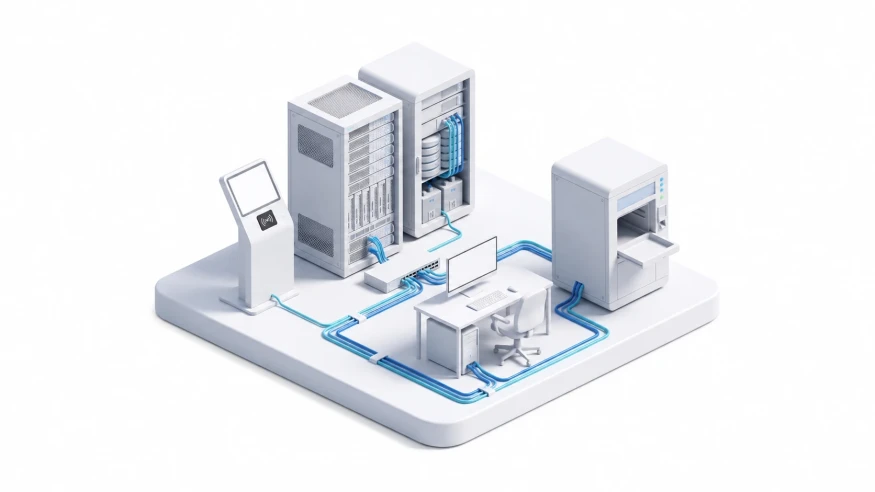
What we did
The project arose where two realities meet: on one side, the legal requirement to provide workers in hazardous industries with therapeutic and preventive meals; on the other, a complete lack of tools to control this process accurately. At mines and plants with hazardous working conditions, meals were handed out using lists and coupons: whoever came got a meal, and data on those who did not was lost. Norms by occupation were calculated by hand, shift schedules were only roughly accounted for and abuse at the point of issue was practically inevitable. The client wanted to solve two problems at once: comply with the law on meal norms and build a transparent, automated distribution process with no manual records and no loopholes. We began by studying the regulatory framework and the specifics of production: which occupations are entitled to which types of meals, how shift schedules work, how many distribution points the company has and how the HR system and access control work. It became clear that the system had to do more than automate distribution: it had to fit into the company's existing infrastructure, pulling current employee data from the HR system and actual attendance data from the access control system so that planned meal volumes are calculated automatically without manual input. Development ran on several fronts. The norms module set out the link between each employee's occupation and the types and amounts of meals they are entitled to under the statutory norms; this became the benchmark from which the system calculates everything else. The integration service brings in data from the HR and access control systems: the system knows who came to work and automatically allocates meals to those actually working, with nothing allocated to absentees. The meal allocation module calculates planned volumes based on the shift schedule, with no manual recalculation or human error. The meal distribution module, with equipment installed at each point — a cashier terminal and an electronic card reader — made getting a meal quick and controlled. An employee taps their card, and the system checks their entitlement and allowed amount and records the issue. Getting more than the norm is ruled out by the system's logic, not left to the cashier's discretion. The central and local database synchronization service keeps distribution points running even when the connection is unstable, which is critical for underground and remote sites. The reporting module automatically produces data on actual distribution, stock and compliance with the norms. As a result, the client has a system in which every worker is guaranteed to receive exactly the meals they are entitled to, and the company has documented proof of compliance with the law, with no manual records and none of the abuse that came with them.
-
25.
Explosives accounting information system
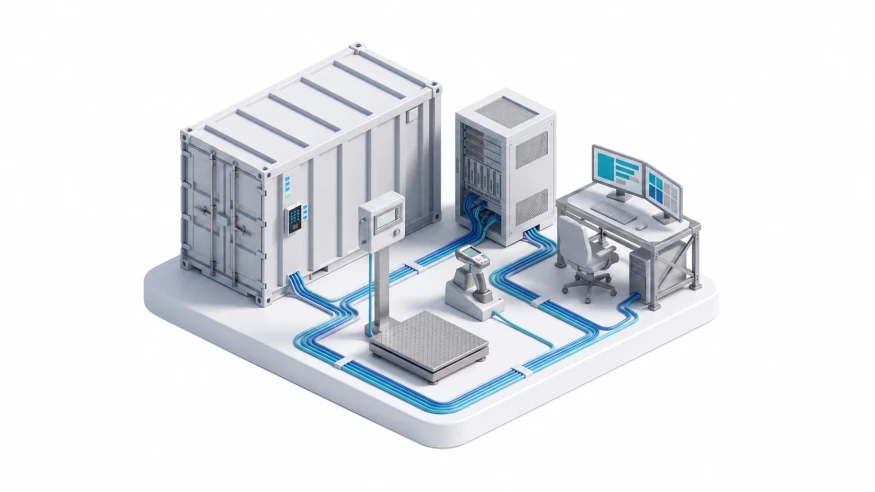
What we did
The project grew out of strict regulatory requirements: explosives are one of the few categories where an accounting error is not just an administrative offence but grounds for serious consequences. Organizations that handle explosives must record every movement of materials — receipt, issue and return of any remainder — and report regularly to regulators, in particular the Committee for Industrial Development and Industrial Safety. Before automation, these records were kept by hand: logbooks, paper waybills and manual stock counts. With so much at stake, human error is an unacceptable risk, and the client wanted to eliminate it completely. We began with a detailed study of the regulations and the actual warehouse processes: how receipts are documented, on what grounds materials are issued, how the return of unused remainders is recorded and in what format and how often reports are submitted to regulators. This was a crucial stage: the system had not only to automate record-keeping conveniently but to comply fully with the mandatory requirements. No deviation from the prescribed reporting forms is acceptable. Development strictly followed the key business processes. The receipts and stock module covers the first loop: each batch of materials is recorded on arrival at the warehouse with a full set of attributes, and stock is recalculated automatically after every operation. The issue and return module enforces a strict order of movements: each issue is recorded with the recipient, grounds and quantity, and the return of any unused remainder is recorded as a separate operation, so the system can show at any moment how much material is in the warehouse, how much has been issued and to whom. The mandatory reporting module automatically compiles consumption and stock data into the prescribed forms, including reports for the Committee, with no manual assembly and no risk of arithmetic errors. The admin panel provides access control: the storekeeper, the person responsible for issue, the manager and the inspector each work within their own authority, without overlapping in areas of critical responsibility. As a result, the client has a system in which every gram of explosive has a documented history from receipt to write-off, and mandatory reports are generated at the click of a button — error-free and without hours of manual preparation.
-
26.
Information system for managing the dispatch operational summary
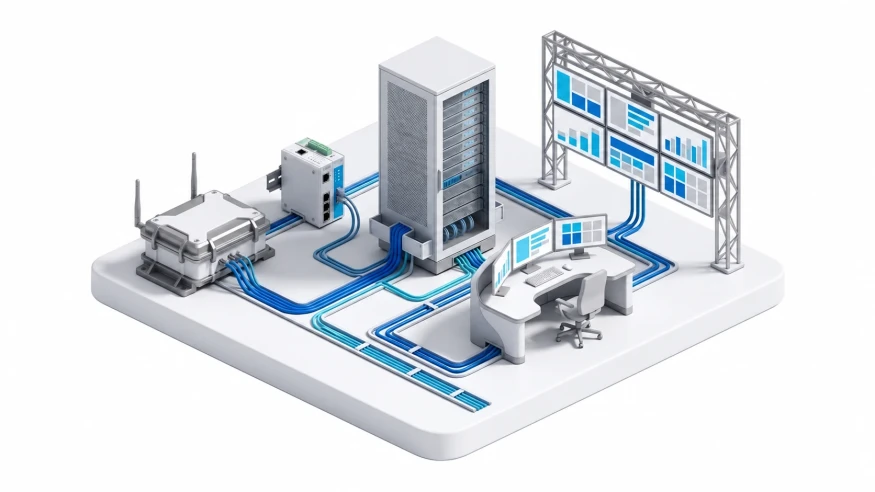
What we did
The project grew out of the nature of mining operations, where the dispatch service is the nerve centre of the entire operation. Mines and processing plants run around the clock, and every equipment stoppage, planned or unplanned, immediately affects production figures. Before automation, dispatchers recorded downtime and operating figures by hand: logbooks, phone reports and spreadsheets passed along the chain from sections to the central dispatcher. By the time the final summary was ready, the data was already out of date and manual input errors had piled up. The client wanted the dispatcher to see an up-to-date picture of every facility at any moment, without calling the sections or compiling data by hand before every report. We began by immersing ourselves in the real rhythm of the dispatch service: how stoppages are recorded, who reports information and in what order, which figures are kept for each complex and in what format and how often reports are produced. We separately studied the specifics of different types of facilities, since mines and processing plants have different equipment and different logic for recording downtime. The architecture was designed so that the system handles this diversity equally well within a single interface. Development moved from the accounting core to analytics. The equipment module for mines and plants created a register of every piece of machinery linked to its complex and facility, which became the foundation for all subsequent records. The planned and emergency downtime module records each stoppage the moment it happens — the cause, start time and responsible section — so data goes straight into the system instead of piling up in notebooks until the end of the shift. The end of the downtime is recorded in the same place, and the system automatically calculates its duration and impact on the figures. The operating figures module tracks planned and actual data side by side for each production section. Deviations from the plan are visible immediately, with no extra calculations. Coal and fuel oil stock monitoring is built into the same environment, so the dispatcher does not have to switch between sources to get a full picture of production. The reporting module automatically compiles summaries of breakdowns, downtime and operating figures in the required formats: the dispatcher's report is no longer manual work at the end of the shift but the result of data entered in real time throughout the shift. As a result, the client has a system in which the dispatch service works with a live picture of production rather than delayed summaries, and any deviation from the norm is recorded and escalated the moment it occurs, not at the end of the shift.
No projects match these filters yet
